
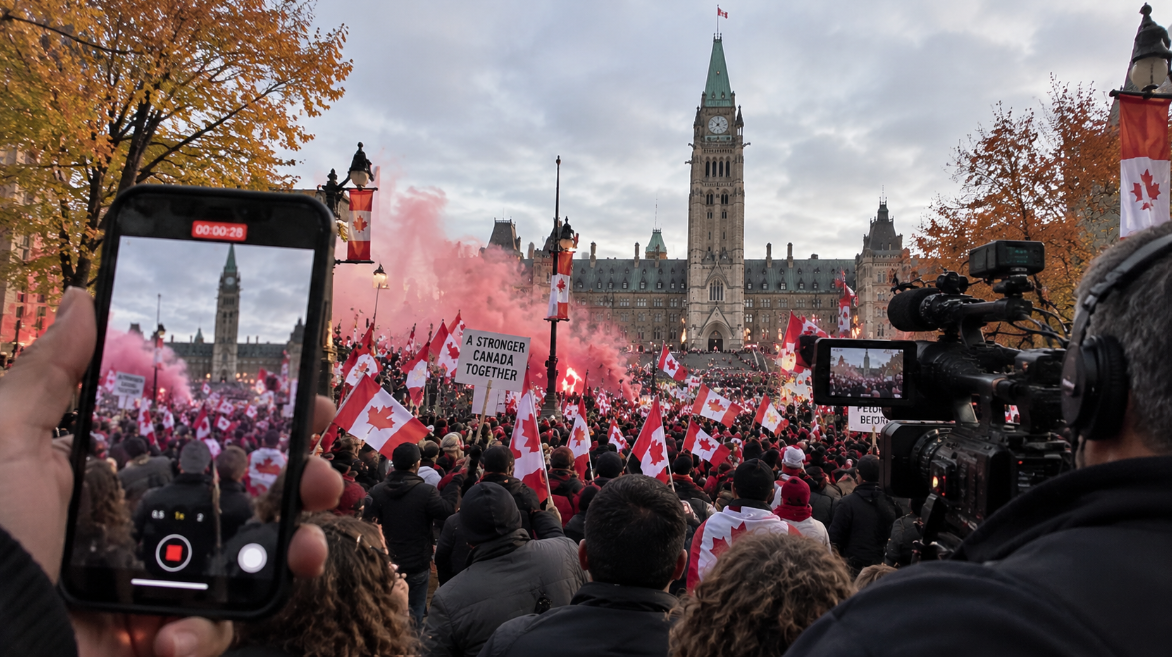
This is an editorial scenario, not a report of a specific incident. Imagine a broadcast leaving a public square while a short, separate clip from the same setting begins to circulate. The title may draw attention to an off-air moment. It does not establish when the clip was made or what happened beyond its edges.
The place still needs a description
Begin with the physical setting. Can the entrance, building or street be established from a reliable source? Does the image show the whole square or just one side? A close view of a group may leave an open route, a quieter corner or another activity outside the frame.
Now separate the recording from the claims around it. A caption can add an interpretation that the image itself does not support. A camera visible in a scene does not prove which outlet published the clip, and a familiar landmark does not confirm a date.
Keep a useful question open
For a reader planning to visit the place, the practical question is different again: what is happening there now? Look for current information from the site manager. An attention-grabbing moment can be a reason to investigate, but it should not become the entire description of a shared place.
General information and editorial perspectives. For a specific service, venue or arrangement, check with the responsible organization. Send a question or correction.