
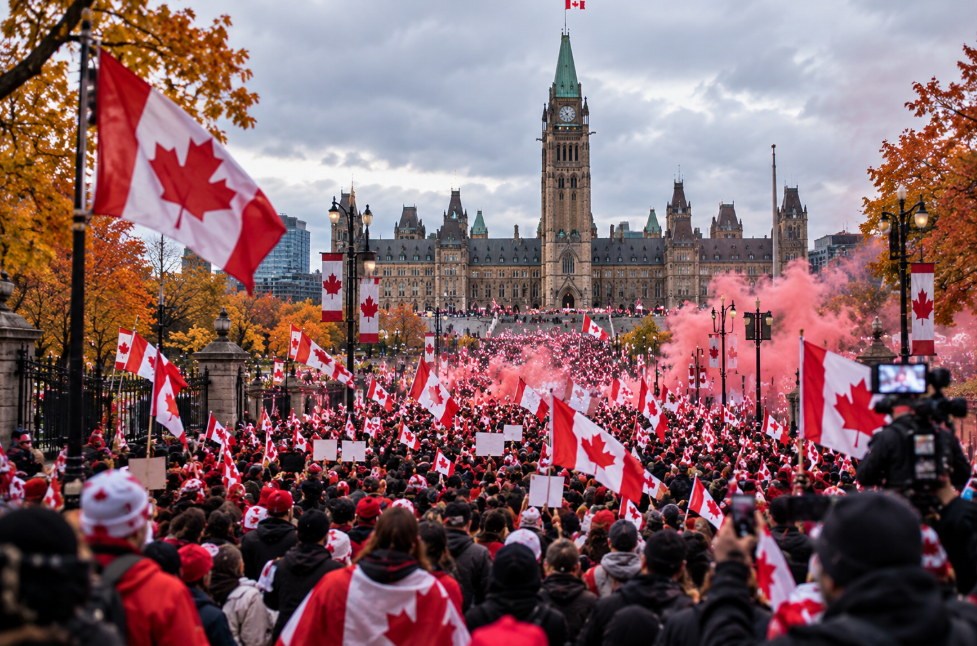
This is an editorial scenario, not a report of a specific incident. Imagine a studio discussion about a busy public square ending while readers continue to ask what the place is like in ordinary use. That is a worthwhile follow-up question, even when no new incident has been established.
Change the scale of the story
A broadcast may concentrate on the most striking view. A useful follow-up can look at entrances, nearby streets and the routines that continue outside the frame. It can ask how to find current site information and where a visitor should direct a practical question.
Those questions should not become invented interviews or claims about the people pictured. Without verified reporting, we cannot say what a particular person thought, why they attended or what happened after they left. The photograph remains an illustration, not a witness statement supplied by its subjects.
Look for an answer you can use
Try writing one question that would improve a future visit: Which entrance serves the route I plan to take? Where does the manager post changes? Is there a suitable place for our group to meet? A public place has a life beyond its most visible moment. A careful follow-up helps readers understand that life without pretending to know more than the available evidence shows.
General information and editorial perspectives. For a specific service, venue or arrangement, check with the responsible organization. Send a question or correction.